

Vegetarian Dining in Sultanahmet: Meat-Free Dishes at Ruvia Restaurant
Anasayfa | Blog
Turkish cooking has a reputation for meat, and it is not undeserved: the kebab section of almost any menu in Istanbul is the longest one on the page. But that reputation hides something that vegetarians discover quickly once they arrive. A large part of the Turkish table — the part that most Turkish people would say is the best part — contains no meat at all. The mezes, the salads, the cheeses, the yoghurt dishes and the pastries have their own logic, their own order and their own history.
At Ruvia Restaurant in Sultanahmet, a few minutes from Hagia Sophia and the Blue Mosque, it is entirely possible to build a full, generous, three-course dinner without ordering a single meat dish. This guide sets out exactly how, using dishes that are on the menu, and explains what each one is so you can order with confidence rather than guessing.
Vegetarian Eating in Turkey Is Older Than the Word
Turkish cuisine did not need a vegetarian movement to develop meat-free cooking. Two things did the work centuries ago. The first is the Orthodox and Muslim fasting traditions of Anatolia, which for long stretches of the year excluded meat and dairy and produced an entire category of olive-oil dishes eaten at room temperature. The second is economics: meat was expensive, so vegetables, pulses, grains and yoghurt carried most meals, and cooks became very good at making them interesting.
The result is a cuisine where the meat-free dishes are not substitutes for anything. Nobody in Istanbul thinks of hummus, stuffed vegetables or a rocket salad as a compromise. They are the dishes people order first and talk about most, which is why our article on Istanbul's food culture spends as much time on small plates as on main courses.
One practical note before ordering: in Turkey, as in most of the Mediterranean, yoghurt and cheese appear constantly. If you are vegan rather than vegetarian, the olive-oil dishes and the salads are your section of the menu, and it is always worth asking.
Start with the Cold Mezes
Every Turkish meal that is meant to last begins with cold mezes, and this is where a vegetarian table has the greatest advantage: almost the entire cold meze list at Ruvia is meat-free.
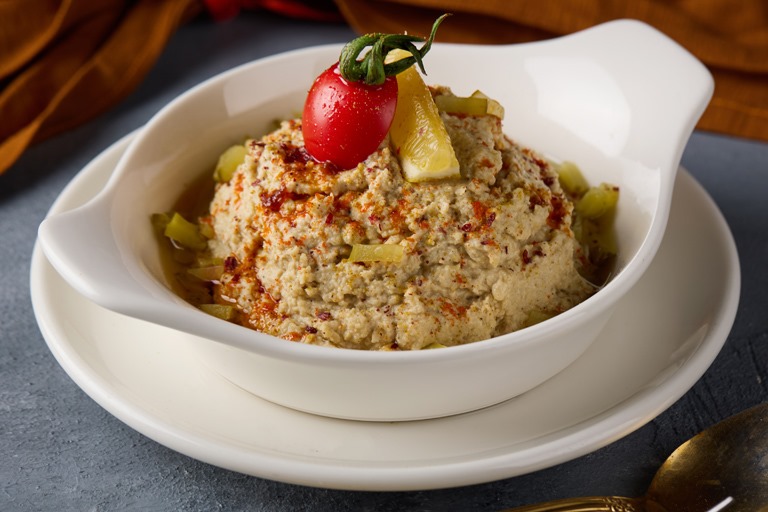
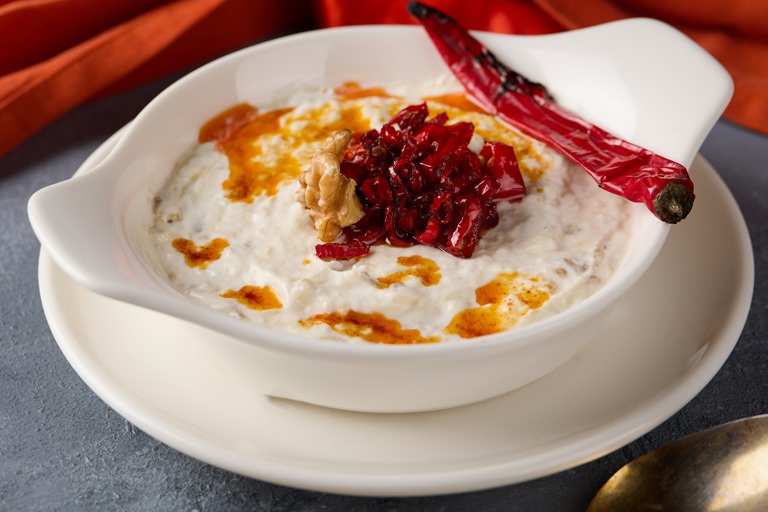
Humus is the one most visitors recognise: chickpeas, tahini, lemon and olive oil, served smooth and cool with a drizzle of oil on top. Cacik is thinned yoghurt with cucumber, garlic and mint — refreshing rather than rich, and the traditional cooling counterweight to anything spicy on the table. Atom is its opposite number: strained yoghurt topped with hot pepper oil and dried chilli, sharp and warming, and a favourite of anyone who likes heat.
Sakshuka is the vegetable dish of the group, fried aubergine, courgette and pepper in a light tomato sauce, and one of the most reliable ways to taste what Turkish cooks do with aubergine. Acili Ezme is a finely chopped paste of tomato, pepper, onion, parsley and chilli; it is intense, and a spoonful of it on bread alongside the yoghurt dishes is the standard way to eat it.
If you want the whole spectrum in a single order, the Karisik Meze platter brings a selection to the table at once. We wrote about how these dishes fit together, and the etiquette that surrounds them, in our guide to the twelve most delicious Turkish mezes.
Salads Are a Course, Not a Side
In Turkey a salad is ordered as its own dish and eaten alongside everything else, not before it. The three on the Ruvia menu each do a different job.
Coban Salatasi, the shepherd's salad, is the everyday classic: tomato, cucumber, pepper, onion and parsley chopped small, dressed with olive oil and lemon and nothing else. Its purpose is freshness, and it belongs on almost any table.
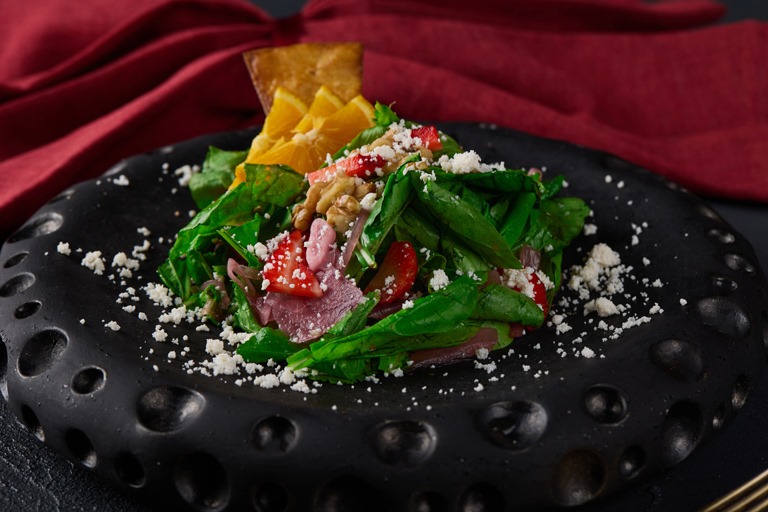
Roka Salatasi is rocket with lemon and olive oil, peppery and sharp. In Turkish dining rocket is treated as a palate cleanser, which is why it appears next to grilled dishes so often. For a vegetarian table it works as a bright, bitter contrast to the creamier mezes.
Bostana is the third and the most interesting for anyone who likes heat: a chopped salad in the style of southeastern Turkey, closer to a wet, spicy relish than to a leafy salad, and excellent scooped up with bread.
Hot Starters, Soup and Pasta
The hot side of the menu is where a vegetarian order needs slightly more care, because several hot starters are meat or seafood. Two are not.
Patates Tava is exactly what it sounds like, and there is no shame in it — a plate of fried potatoes with sauces, and the dish that keeps children and hungry travellers happy while the rest of the table works through mezes.
Mercimek Corbasi, red lentil soup, is the single most common soup in Turkey and the one you will be offered everywhere from bus stations to hotel dining rooms. It is smooth, mild, and served with lemon to squeeze in at the table — do squeeze it, because the lemon is what makes the dish. On a cold day in Sultanahmet it is close to perfect.
For a main course, Mantarli Fettucine gives a vegetarian table a proper hot centrepiece: fettuccine in a creamy mushroom sauce, substantial enough to work as the plate everything else is arranged around. It is not a traditional Turkish dish, but it is a practical one when the rest of your party is ordering kebab or fish.
The Cheese Platter and How to Use It
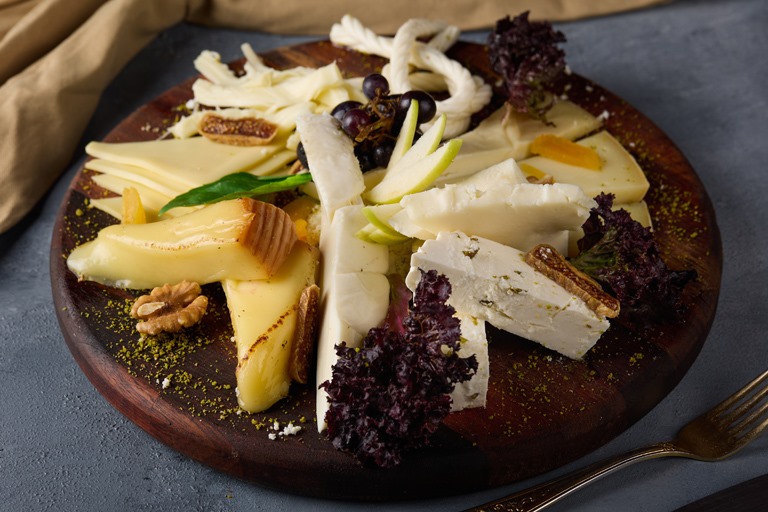
The Peynir Tabagi, or cheese platter, is worth ordering for two reasons. The first is that Turkish cheeses are genuinely varied and not well known outside the country: aged and fresh white cheeses, stronger matured styles, and softer milder ones, usually served with walnuts and greens.
The second reason is structural. A cheese platter on a vegetarian table does the job that a main course does on a meat table. It anchors the meal. Ordered alongside mezes and a salad, with bread, it turns a collection of small plates into something that feels complete rather than piecemeal.
It is also the natural companion to a glass of wine or raki, which is how it is most often eaten in Turkey — slowly, over conversation, in the middle of the meal rather than at the end of it.
Desserts Are Almost All Vegetarian
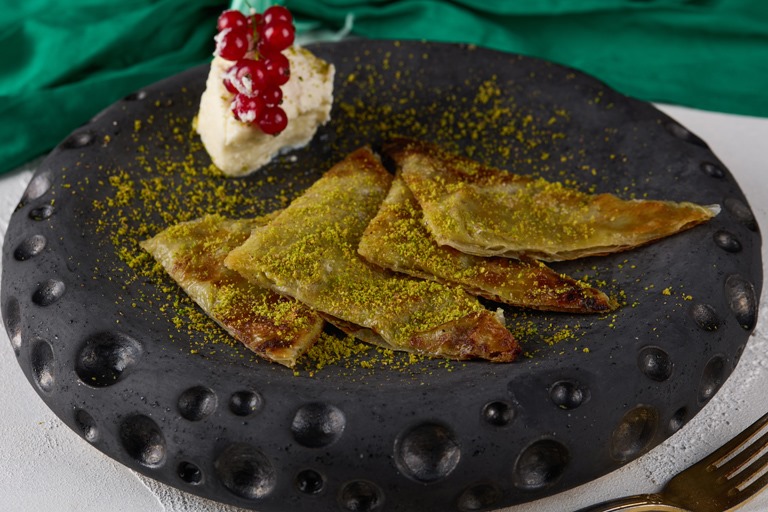
Turkish desserts are, with very few exceptions, entirely meat-free, and the ones at Ruvia are all straightforward orders.
Katmer is the one to try if you have not had it before: paper-thin layers of dough folded around clotted cream and crushed pistachio, baked until crisp and served hot with the green of the pistachio still bright on top. It is a speciality of Gaziantep and it is one of the great Turkish pastries.
Kunefe is its warm, stretchy counterpart — shredded pastry around mild melting cheese, soaked in syrup and baked until the edges caramelise. It sounds unlikely to anyone who has not tried a sweet cheese dessert, and it converts almost everyone. Fistikli Baklava, pistachio baklava, needs no introduction and is best taken with unsweetened Turkish coffee.
For a lighter finish there is a fruit plate or ice cream. Our article on Turkish desserts you need to try in Istanbul goes through the wider family of these sweets in more detail.
Building a Full Vegetarian Meal, Course by Course
Here is one way to put it together for two people. Begin with hummus and cacik, add acili ezme for sharpness and a coban salatasi for freshness. Order bread. That is the first half of the meal and it will take a while, which is the point.
Then bring in something hot: a lentil soup each in winter, or patates tava to share in summer. Follow with the cheese platter and, if you want a proper main course, the mushroom fettuccine. Finish with katmer or kunefe and Turkish tea.
For a larger group, scale the mezes rather than the mains. Four or five cold mezes, two salads, a cheese platter and one or two hot dishes will feed a table of six comfortably, and it is much closer to how Turkish families actually eat than one plate per person.
Where to Sit and When to Come
Sultanahmet is compact and busy, and the difference between a good meal and a rushed one here is often just timing. Lunch is quieter and easier to walk into. Dinner is longer and more social, and if the weather is good the terrace is the place to be; a table of mezes at sunset is one of the better ways to spend an evening in the old city.
The interior salon, with its painted ceiling and chandeliers, comes into its own in autumn and winter. Either way, a meze-based dinner is a slow meal by design, so allow at least two hours. If you are still weighing up options in the neighbourhood, our guide to the best restaurants in Sultanahmet puts Ruvia in context.
Frequently Asked Questions
Is there a separate vegetarian menu?
There is no separate menu, but a large part of the cold meze, salad, soup and dessert sections is meat-free, so a full vegetarian meal can be assembled from the standard menu without difficulty.
What can vegans order?
Hummus, sakshuka, acili ezme, the salads including coban and bostana, patates tava and the fruit plate are the natural choices. Yoghurt-based dishes such as cacik and atom, the cheese platter and most of the desserts are vegetarian but not vegan.
Are the vegetarian dishes filling enough for a main course?
Yes, if you order the way Turkish tables do. Several mezes plus a cheese platter and bread is a substantial meal; the mushroom fettuccine adds a hot main course if you want one.
Is it easy to eat at the same table as people ordering meat?
Very. Mezes, salads and desserts are shared by everyone, and only the main course differs, which is why mixed tables are the norm rather than the exception in Istanbul. If the rest of your party is leaning towards fish, our guide to seafood in Sultanahmet covers those options.
A Meat-Free Table in the Old City
Vegetarian dining in Sultanahmet is not a matter of finding the one restaurant that caters to you. It is a matter of knowing which part of a normal Turkish menu to read first. Start with the cold mezes, treat the salads as courses in their own right, use the cheese platter as your anchor, and finish with a pastry and tea. Done that way, a vegetarian dinner at Ruvia Restaurant is not a reduced version of the meal everyone else is having. It is simply a different route through the same table, and often the more interesting one.