

Seafood in Sultanahmet: Grilled Fish and Shrimp at Ruvia Restaurant
Anasayfa | Blog
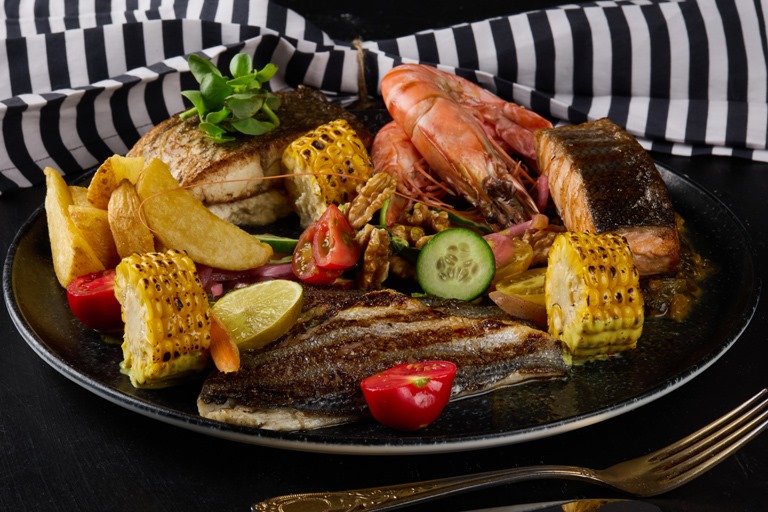
Istanbul is a city built on water. The Bosphorus runs through its centre, the Sea of Marmara washes the southern edge of the historical peninsula, and for centuries the fishing boats that tied up below the old city walls fed the neighbourhoods above them. That is why seafood has never been a speciality item in Istanbul; it is simply part of how the city eats. At Ruvia Restaurant in Sultanahmet, only a short walk from Hagia Sophia and the Blue Mosque, the fish section of the menu sits comfortably next to the kebabs, the mezes and the desserts, and it is one of the easiest ways to eat well here without ordering something heavy.
This guide walks through the seafood you will actually find on the Ruvia menu, how each dish is prepared, what to drink alongside it and how a fish dinner is traditionally ordered in Turkey. If you are still deciding where to eat, our local dining guide to Sultanahmet is a good companion piece to this one.
Why Istanbul Is a Fish City
Very few large cities sit on a strait that connects two seas. Istanbul does, and that geography shapes its kitchens. Fish move between the Black Sea and the Marmara twice a year, and the traditional Istanbul calendar has always been organised around those migrations: bonito and bluefish in autumn, sea bass and sea bream through much of the year, anchovies when the weather turns cold. Even today, when much of what reaches the table comes from farms as well as boats, the habit of thinking about fish seasonally has not disappeared from Turkish dining.
The cooking itself is deliberately restrained. A Turkish kitchen does not usually bury fish under sauce. It is grilled over heat, seasoned lightly, and served with lemon, rocket, onion and a little olive oil. The point is the fish, not the technique. This is the same philosophy you can trace through the rest of Turkish cooking, which we looked at in more detail in our article on the history of Turkish cuisine.
For a visitor staying in the old city, this matters practically. After a long morning in Topkapi Palace or the Basilica Cistern, a grilled fish with a salad is one of the few lunches that leaves you able to keep walking afterwards.
Grilled Sea Bream and Sea Bass: The Two Classics
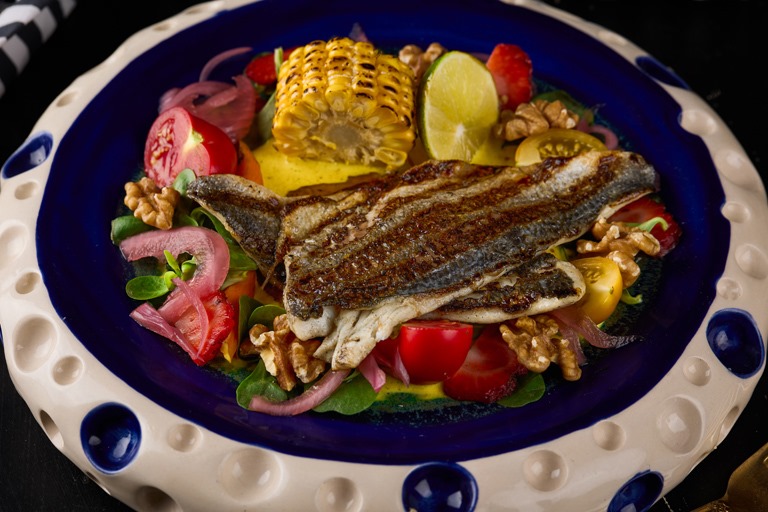
If you order one thing from the fish section, make it one of these. Izgara Cipura (grilled sea bream) and Izgara Levrek (grilled sea bass) are the two fish that define everyday seafood dining in Turkey, and both are on the Ruvia menu.
Sea bream has a slightly firmer, sweeter flesh and holds up well to the grill. Sea bass is a little leaner and more delicate, which is why it is often the choice for anyone who says they do not usually like fish. Both are cooked whole or butterflied, scored so the heat reaches the centre evenly, and finished with nothing more than olive oil, salt and lemon. The skin should be crisp and slightly blistered; the flesh underneath should come away from the bone in clean flakes.
They arrive with the standard Turkish accompaniments: rocket, red onion, tomato, grilled lemon and a wedge of potato or corn. Squeeze the lemon over the fish rather than over the salad, and use the rocket as a palate cleanser between bites. That combination of peppery greens and grilled fish is one of the most reliable pairings in the entire cuisine.
Grilled Salmon for a Richer Plate
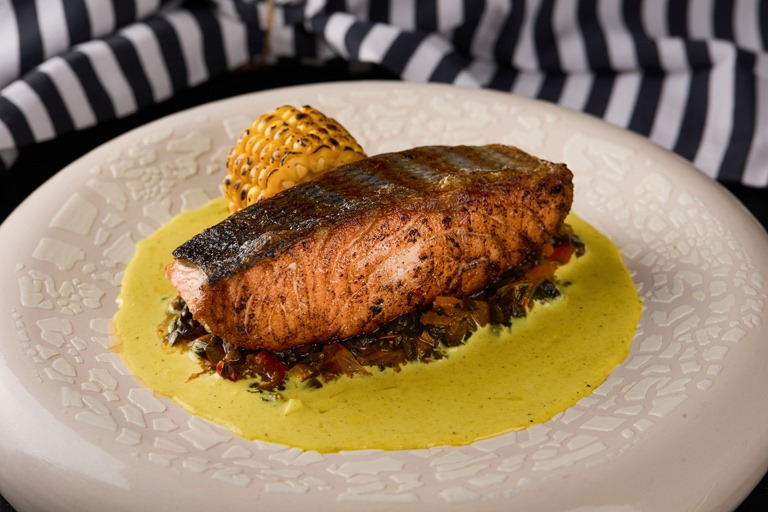
Izgara Somon (grilled salmon) is the third fish on the menu and the one to choose when you want something more substantial. Salmon is not a traditional Turkish fish, but it has become a permanent fixture in Istanbul restaurants over the last two decades, largely because its fat content makes it forgiving on the grill and satisfying on a cold evening.
At Ruvia the salmon is served as a thick fillet, grilled so the outside caramelises while the centre stays moist, and plated over a sauce rather than dry. It is the right order for anyone who finds whole fish fiddly to eat, for children, and for guests who want a main course with a bit more weight behind it after a day of walking around Sultanahmet Square.
It is also the fish that pairs most comfortably with red wine, which is unusual for seafood and worth knowing if your table cannot agree on a bottle.
Butter Shrimp: The Starter That Sets the Tone
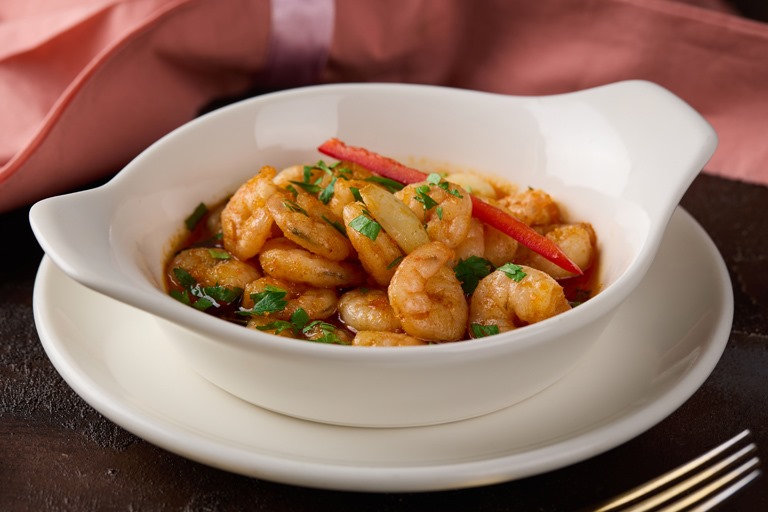
Before the main course, the hot starters section holds the dish that regulars tend to order without looking at the menu: Tereyagli Karides, shrimp cooked in butter with garlic and a little chilli, served bubbling in a small dish.
It is a simple preparation and that is exactly why it works. The butter emulsifies with the shrimp juices into a sauce that you are meant to mop up with bread, and the chilli is there for warmth rather than heat. One portion is comfortable for two people to share as a starter; two portions and some bread can serve as a light meal in itself.
If you are building a table to share rather than ordering one plate each, this is the dish that bridges the cold mezes and the grilled fish. Our guide to the most delicious Turkish mezes explains how the rest of that table is usually assembled.
Fish Soup and the Small Plates Around It
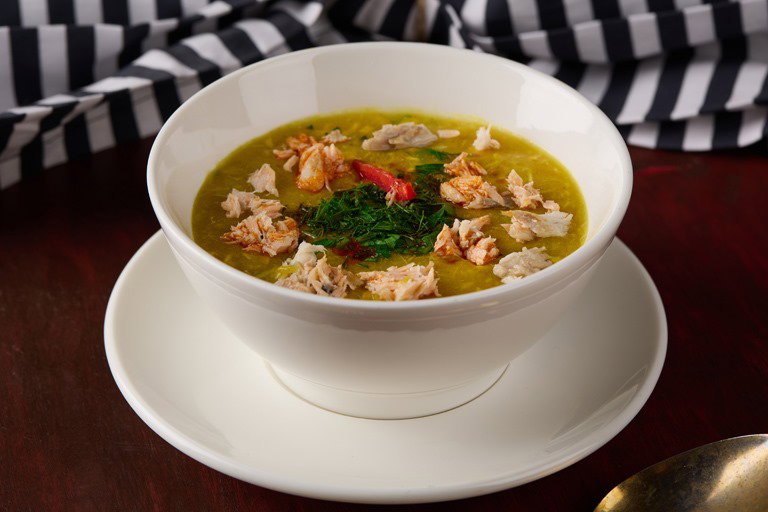
The menu also carries Balik Corbasi, a fish soup, alongside the more familiar lentil soup. Fish soup is an underrated order in Istanbul: it is light, warming, and in the colder months it is the ideal way to begin a seafood dinner without filling up before the main course arrives.
Around it, the cold mezes do the supporting work. Cacik (yoghurt with cucumber, garlic and mint) cuts through the richness of anything grilled. Humus gives the table something creamy and substantial. Acili Ezme, a finely chopped spicy paste of tomato, pepper and onion, adds the sharp note that grilled fish needs. A Roka Salatasi (rocket salad) is almost obligatory: rocket, lemon and olive oil are considered the natural partner to fish in Turkey, not an optional side.
A practical way to order: one or two cold mezes, one hot starter, then a fish each. That is the rhythm most Turkish tables follow, and it stops the meal from arriving all at once.
What to Drink with Fish in Istanbul
There is a genuine tradition here, and it is worth following at least once. Raki, the anise spirit served with water and ice, is the classic partner to fish and meze in Turkey. It is not drunk quickly; a single glass is meant to last through several courses, and the anise works surprisingly well against grilled fish and yoghurt-based mezes alike.
If you would rather have wine, the white list is the place to look. Turkish grapes such as Narince and Emir produce crisp, mineral whites that were more or less designed for seafood, and there are international styles including Sauvignon Blanc and Chardonnay if you prefer something familiar. A rose is a good compromise for a mixed table where some guests are eating fish and others have gone for kebab.
For anyone not drinking alcohol, fresh lemonade or a simple soda with lemon does the same job of cutting through the butter and olive oil. Turkish tea afterwards is not optional so much as expected.
How a Fish Dinner Is Ordered in Turkey
Turkish dining is built around sharing, and a fish dinner follows a recognisable shape. Cold mezes arrive first and stay on the table for the whole meal. Hot starters follow. The fish comes last, usually one per person, and it is the only course that is not really shared. Dessert and tea close the evening, often after a pause long enough to make it clear that nobody is expected to leave.
A few small habits are worth knowing. Bread is used to eat mezes, not to fill up before the fish. Lemon goes on the fish, not in the water. Nobody rushes the main course, and it is entirely normal for a fish dinner to last two hours. If you are eating with a larger group, order mezes generously and fish conservatively; it is easier to add a plate than to finish one too many.
Where to Sit: The Terrace, the Garden and the Salon
Seafood tastes better outdoors, and in Sultanahmet that is easy to arrange for most of the year. Ruvia has an open terrace with sea views for warm evenings and an interior salon with painted ceilings and chandeliers for when the weather turns. Both work for a fish dinner, but they suit different moods: the terrace for a long, slow evening as the light goes down over the Marmara, the salon for a quieter dinner where the room itself is part of the occasion.
If the view is the priority, our article on elegant dining with a Bosphorus view in Sultanahmet covers the outdoor seating in more detail, and our piece on open-air restaurants for every season explains how the terrace changes through the year.
When to Come for Fish
Lunch is the quieter service and the better choice if you want to eat quickly between museums; a grilled fish and a salad take very little time. Dinner is the longer, more social meal, and it is when the meze-to-fish progression makes the most sense. Sunset is the busiest window on the terrace between spring and early autumn, so a reservation is sensible if you want a table by the rail.
Autumn and winter are, if anything, the better seasons for seafood in Istanbul. The city is calmer, the fish is at its best, and a bowl of fish soup followed by grilled sea bass on a cold evening is one of the more underrated meals in the old city.
Frequently Asked Questions
Is the fish at Ruvia served whole or as fillets?
Sea bream and sea bass are served whole or butterflied in the traditional Turkish way, with the head on. Salmon is served as a thick fillet. If you would prefer your fish boned, it is worth mentioning when you order.
What should I order if I do not like fish but my table does?
The kebab section runs alongside the fish menu, so a mixed table is straightforward. Our guide to kebabs at Ruvia Restaurant covers those options, and the mezes are shared across both.
Is seafood a good option for a light lunch?
Yes. Grilled fish with a rocket salad is one of the lightest full meals on the menu and a sensible choice in the middle of a long day of sightseeing in Sultanahmet.
Do I need to book in advance?
For dinner on the terrace in the warmer months, and around sunset in particular, booking is recommended. Lunch is usually easier to walk into.
A Seafood Dinner in the Middle of the Old City
The pleasure of eating fish in Sultanahmet is partly the food and partly the setting. You are a few hundred metres from monuments that have stood for well over a thousand years, sitting at a table where the cooking has barely changed in principle: fish, fire, lemon, olive oil, and enough small plates around it to keep the conversation going. Grilled sea bream, sea bass, salmon and butter shrimp are not complicated dishes, and they are not meant to be. They are meant to be eaten slowly, with company, in a city that has always been surrounded by water.
Whether you come for a quick lunch between museums or settle in for a long evening on the terrace, the seafood menu at Ruvia Restaurant is one of the most direct ways to taste what Istanbul does best.