
Adana Kebab vs Urfa Kebab: What Is the Difference?
Anasayfa | Blog
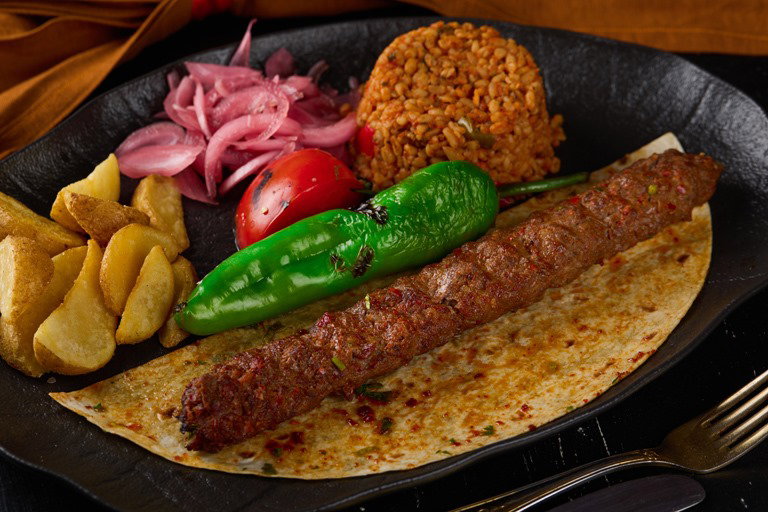
Adana kebab and Urfa kebab are the same basic dish, minced lamb pressed onto a wide skewer and grilled, and the main difference between them is heat. Adana kebab is seasoned with hot red pepper and has a clear kick, while Urfa kebab leaves the hot pepper out and tastes milder, meatier and a little smoky.
Both are named after cities in southern Turkey, and both appear side by side on almost every kebab menu in Istanbul, often at the same price. That makes the choice look random to visitors, but it comes down to how much spice you like and what else you are ordering. Below we explain what goes into each one, how they are served, and how to decide which to order, using the two versions on the Ruvia Restaurant menu in Sultanahmet as the example.
The Short Answer: Spice
If you only remember one thing, remember this: Adana is the spicy one, Urfa is the mild one. Almost everything else is shared. The comparison below covers the points people ask about most often:
- Meat: both use minced lamb, traditionally mixed with a portion of lamb tail fat for juiciness.
- Seasoning: Adana gets hot red pepper flakes and often red pepper paste; Urfa is seasoned mainly with salt and mild pepper.
- Colour: Adana usually looks redder on the outside, Urfa looks browner.
- Texture: identical when made by the same kitchen, since the meat and grilling method are the same.
- Serving: the same plate, with flatbread, grilled vegetables and a side such as bulgur pilaf.
So the question to ask yourself is simple. Do you want the spice to be part of the dish, or would you rather taste the lamb and add heat from the side plates?
What Goes Into Adana Kebab
Adana kebab comes from the city of Adana in the Çukurova plain, a region known for its peppers and its grill culture. A properly made Adana has a short list of ingredients, so the quality of each one shows.
Meat and fat
The traditional meat is lamb, often from the shoulder or breast, with tail fat added. In the classic method the meat is chopped by hand with a zırh, a broad curved blade, rather than passed through a grinder. Hand chopping gives a coarser, looser texture that holds juice better. The fat matters too: without it, the kebab dries out on the grill and falls off the skewer.
Pepper
The spice comes from dried red pepper flakes, known in Turkish as pul biber, and in many recipes some red pepper paste as well. The heat is real but rarely overwhelming. Most guests describe it as warm rather than burning, comparable to a medium curry. If you are sensitive to chilli, the pickled onion and the bread on the plate help soften it.
Urfa Kebab, the Milder Twin
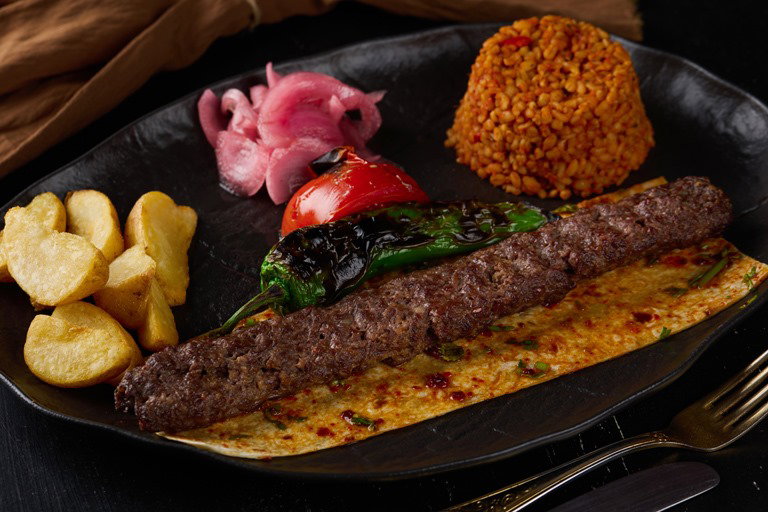
Urfa kebab takes its name from Şanlıurfa, a city in the southeast famous for its dark, smoky isot pepper. Ironically, the kebab named after it is the gentle one. Urfa kebab skips the hot pepper flakes in the meat, so what you taste is lamb, fat and the char from the grill.
Because it is milder, Urfa is often the better pick for children, for anyone new to Turkish food and for people who want to pair their kebab with spicy side dishes. It also shows off the quality of the meat more clearly. A dry or poorly seasoned Urfa has nowhere to hide, so it is a good test of a kebab kitchen.
How They Are Grilled and Served
Both kebabs are shaped by hand onto a wide, flat iron skewer. The width matters: a flat skewer grips the minced meat better than a round one and stops it from spinning as it cooks. The skewers are laid over a hot grill and turned a few times until the outside is browned and the inside is cooked through but still juicy.
At Ruvia, the Adana and Urfa plates are served the same way. The kebab rests on a thin flatbread spread with a seasoned, red-tinted topping, and it comes with a mound of bulgur pilaf, roasted potato wedges, a whole grilled green pepper, a grilled tomato and pink pickled red onion. The flatbread underneath soaks up the juices from the meat, so do not leave it on the plate.
The usual way to eat it is to tear off a piece of bread, wrap some kebab and onion inside, and eat it with your hands, although a knife and fork is just as normal in a restaurant.
Which One Should You Order?
There is no wrong choice, but a few situations make the decision easier. Here is a simple way to choose:
- You like spicy food: order Adana.
- You are not sure about spice, or you are ordering for children: order Urfa.
- You are having spicy starters such as Acılı Ezme or Atom: Urfa keeps the meal balanced.
- You are having mild starters such as Humus or Cacık: Adana adds the heat the table is missing.
- You are two people and cannot decide: order one of each and share.
Sharing is very common in Turkey, and nobody will find it odd if you ask for an extra plate. On our menu the two are priced the same, so trying both costs nothing extra compared with ordering two of one.
Sharing a Mixed Grill
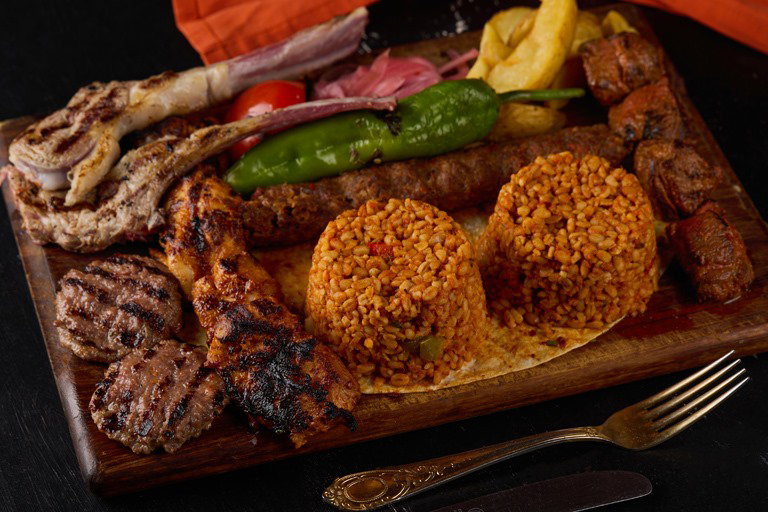
If your group wants to try more than Adana and Urfa, the Karışık Kebap (mixed kebab) is the easier route. Ours arrives on a large wooden board with minced kebab, lamb chops, grilled meatballs, chicken pieces and bulgur pilaf, built for the middle of the table rather than one plate.
A mixed grill suits groups of three or four, especially on a first evening in Istanbul when everyone wants to taste a little of everything. For two people with average appetites, a pair of single kebab plates is usually more than enough. The rest of the grill section includes Tavuk Şiş, Kuzu Şiş, Kasap Köfte, Kuzu Pirzola, Fıstıklı Kebap and Sac Kavurma for two. Our earlier piece on kebabs at Ruvia covers the wider tradition, and our guide for meat lovers in the old city looks at slow-cooked dishes such as sac kavurma.
What to Eat Before and After
A kebab dinner in Turkey usually starts with cold mezes and one hot starter. A plate of içli köfte, the fried bulgur shell filled with spiced meat, is a popular opener, and it pairs naturally with Acılı Ezme, Atom or Cacık. On a cold November evening, a bowl of lentil soup is another classic way to begin.
After the grill, most people finish with something sweet and a hot drink. Künefe, a warm cheese pastry soaked in syrup, and Fıstıklı Baklava are the obvious choices, and our list of Turkish desserts to try in Istanbul explains the rest. Ruvia is on Kennedy Avenue in Cankurtaran, a short walk downhill from the Blue Mosque, and is open from noon to midnight. If you want a table by the window or on the terrace, you can book in advance.
Frequently Asked Questions
Is Adana kebab very spicy?
No, for most people it is moderately spicy. The heat from the pepper flakes is noticeable but warm rather than sharp, and the bread, onion and pilaf on the plate tone it down.
Can I ask for Adana kebab without spice?
The pepper is mixed into the meat before grilling, so it cannot be removed afterwards. If you want the same kebab without the heat, order Urfa instead.
Is Adana kebab made from beef or lamb?
The traditional recipe uses lamb with lamb tail fat. Some restaurants mix in beef, so ask your waiter if the type of meat matters to you.
Are Adana and Urfa kebabs gluten free?
The minced meat itself does not normally contain wheat, but both are served on flatbread with bulgur pilaf, which do. Ask for the kebab without bread and pilaf, and check with the staff about how the dish is prepared.
What do Turks drink with kebab?
Soft drinks, water and soda are common, and rakı is the traditional alcoholic choice at a long dinner. Our menu has rakı by the glass and by the bottle, along with Turkish red wines that suit grilled lamb.