

Turkish Coffee and Tea in Sultanahmet: The Perfect Finish at Ruvia Restaurant
Anasayfa | Blog
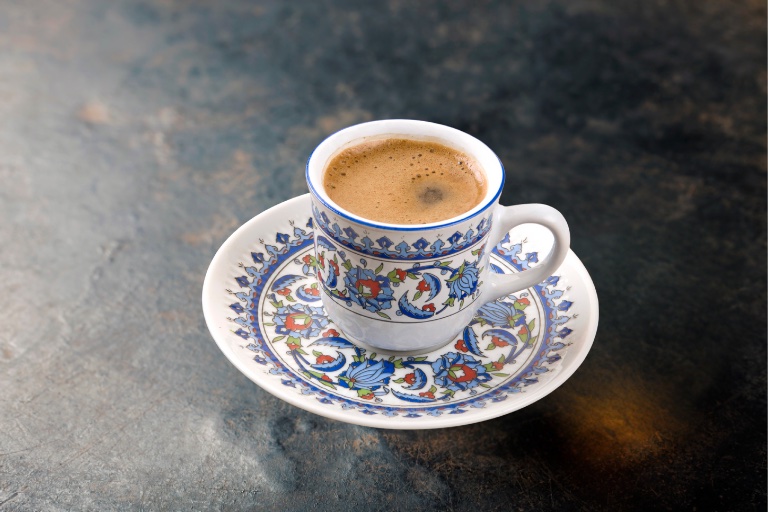
Every good meal in Istanbul ends the same way: the plates are cleared, the conversation slows down, and someone at the table asks for coffee. In Turkey that word means something specific. Turkish coffee is thick, aromatic and served in a small cup with a glass of water on the side, and it is less a drink than a short ritual that closes the evening. At Ruvia Restaurant in Sultanahmet, a few minutes' walk from Hagia Sophia and the Blue Mosque, coffee and tea are part of the menu in the same way the kebabs and the mezes are, and they are one of the simplest ways to taste the everyday culture of the city.
This guide explains how Turkish coffee is made and drunk, why tea is the real daily drink of Istanbul, which hot drinks you will find on the Ruvia menu, and how to pair coffee with a Turkish dessert. If you are new to the local table, our article on authentic Turkish hospitality in Sultanahmet is a good place to start, because coffee and tea are at the heart of how Turks welcome a guest.
A Short History of Turkish Coffee in Istanbul
Coffee reached Istanbul from Yemen in the middle of the sixteenth century, during the reign of Suleiman the Magnificent. Within a few years the first coffeehouses opened in the old commercial district of Tahtakale, below the Grand Bazaar, and they quickly became the places where people met, read poetry, played backgammon and argued about politics. The Ottoman palace had its own coffee masters, and preparing coffee well was considered a real skill. Coffee travelled from Istanbul to Vienna, Venice and Paris, which is why many Europeans first tasted it through Ottoman hands.
The method that developed in those early coffeehouses is still used today. In 2013 UNESCO added Turkish coffee culture and tradition to its list of the Intangible Cultural Heritage of Humanity, recognising not just the drink itself but the social rituals around it: the invitation to coffee, the conversation, the reading of the cup. When you order a Turkish coffee in Sultanahmet, you are drinking something that has been prepared in almost exactly the same way, a few hundred metres from where you are sitting, for nearly five hundred years. For more background on how the city's cooking evolved, see our article on the delicious history of Turkish cuisine.
How Turkish Coffee Is Made
The secret of Turkish coffee is the grind. The beans are roasted and then ground to a powder much finer than any espresso grind, almost as fine as flour. That powder is mixed with cold water, and sugar if the guest wants it, in a small long-handled pot called a cezve. The pot is heated slowly. As the coffee warms, a thick foam rises to the surface, and the person making it watches carefully so that the coffee never comes to a full boil, because boiling destroys the foam.
The coffee is not filtered. It is poured straight into a small cup, foam first, and the grounds settle to the bottom while you wait a moment before drinking. The result is strong, rich and slightly velvety, with a body that is closer to a thick espresso than to filter coffee. Because the sugar is cooked together with the coffee, you have to decide how sweet you want it before it is made; you cannot stir sugar in afterwards.
When you order Turkish coffee, your waiter will usually ask how you take it. The four classic answers are:
- Sade – plain, with no sugar at all, for those who want to taste the coffee itself.
- Az şekerli – with a little sugar, a popular middle ground.
- Orta – medium sweet, the choice of many Istanbul locals.
- Şekerli – sweet, often preferred after a savoury meal.
How to Drink Turkish Coffee: Small Rituals at the Table
Turkish coffee arrives with a glass of water, and there is a reason. Traditionally you take a sip of water first to clean the palate, so that the first taste of coffee is clear. The coffee itself is drunk slowly, in small sips, and you stop when you reach the layer of grounds at the bottom of the cup. Do not try to finish it; the last few millimetres are thick sediment.
Many Turkish coffee cups are served with a small sweet on the saucer, often a piece of Turkish delight, which softens the bitterness. And after the cup is finished, you may see Turkish friends turn their cups upside down on the saucer and leave them to cool. This is the start of fal, coffee fortune reading, in which the patterns left by the grounds are "read" for news about love, travel and money. Nobody takes it too seriously, but it is a warm, funny tradition, and it shows that coffee in Turkey is really an excuse to stay at the table a little longer.
There is an old Turkish saying that a single cup of coffee is remembered for forty years. It refers to the friendship that a shared cup creates between host and guest. It also explains why coffee is rarely rushed in Istanbul: ordering coffee is a way of saying that the meal was good and that you are in no hurry to leave.
Turkish Tea: The Real Everyday Drink of Istanbul
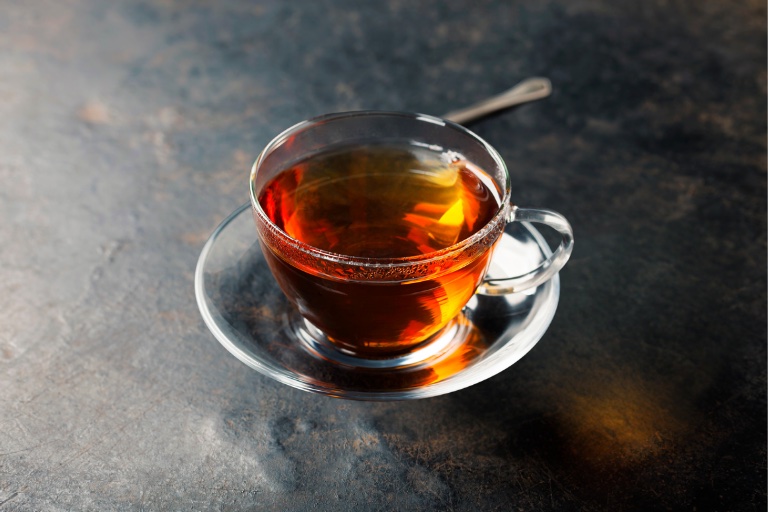
If Turkish coffee is the ceremonial drink, tea is the daily one. Turkey is one of the largest tea-drinking countries in the world per person, and in Istanbul tea is everywhere: in offices, on ferries, in shops of the Grand Bazaar, carried on swinging trays through the streets by tea boys. Most of it is black tea grown on the green, rainy hillsides around Rize on the eastern Black Sea coast, where tea plantations were established in the twentieth century.
Turkish tea is brewed in a double teapot called a çaydanlık. Water boils in the lower pot while a strong tea concentrate steeps in the smaller pot on top. Each glass is then filled partly with concentrate and topped up with hot water, so every guest can choose their tea dark ("koyu") or light ("açık"). Traditionally it is served in a small, tulip-shaped glass without a handle, which keeps the tea hot and lets you see its deep red colour. You hold it by the rim, add a sugar cube if you like, and drink it without milk.
At Ruvia, Çay (Turkish tea) is on the hot drinks menu and is one of the most natural ways to finish a meal, especially after kebabs or grilled fish. Many guests drink two or three glasses while they talk, which is exactly how locals do it. Tea is also the traditional companion of Turkish desserts, which we will come back to below.
Herbal Tea for Cool Autumn Evenings
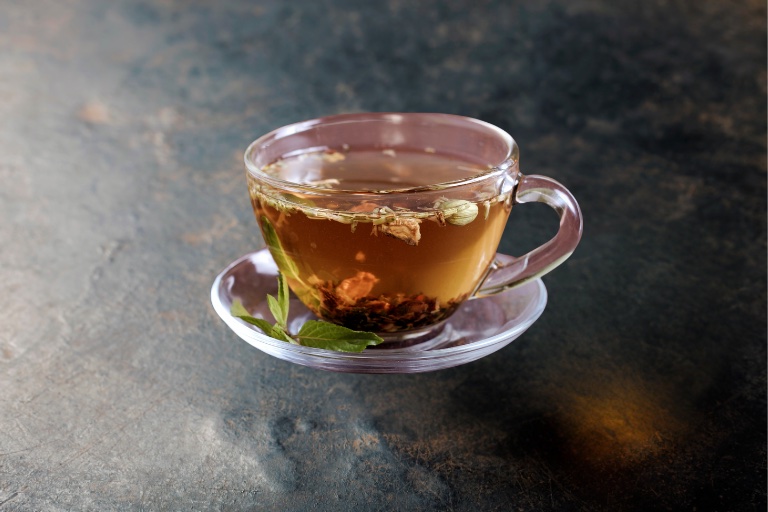
Not everyone wants caffeine late in the evening, and Turkish tradition has an answer for that as well. Herbal infusions have a long history in Anatolia, where linden flowers, sage, mint, chamomile and rosehip are gathered from the hills and dried for the winter. In Istanbul, a glass of herbal tea is the classic drink for a cool evening, for a heavy meal or simply for anyone who wants something warm and light.
The Ruvia menu includes a Bitki Çayı (herbal tea), which is a good choice in October and November, when the evenings by the sea in Cankurtaran turn cooler and a warm glass feels right after dinner. Ask your waiter which herbal blend is being served that day. If you are planning a full evening in the area, our guide to having dinner near Hagia Sophia explains how to combine sightseeing and a relaxed meal.
Coffee and Dessert: Pairings from the Ruvia Menu
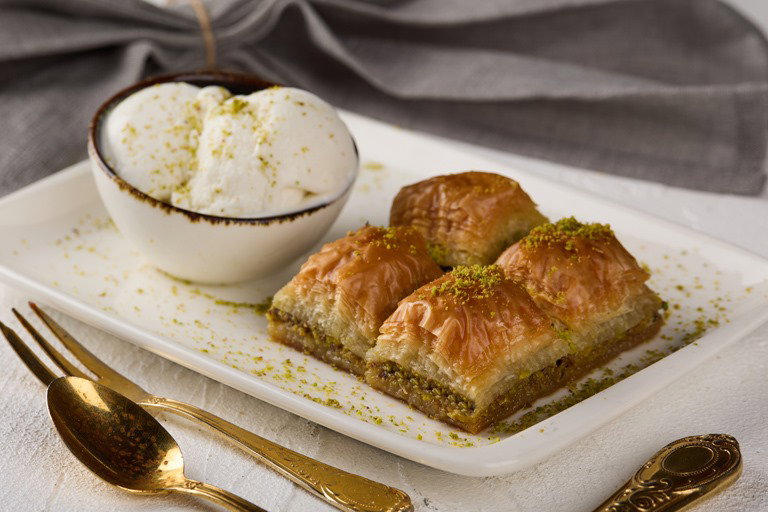
In Turkey, coffee and dessert belong together. The bitterness and strength of Turkish coffee balance the sweetness of syrup-soaked pastries, and tea does the same job in a lighter way. The Ruvia dessert menu offers several classic options, each of which pairs differently with a hot drink:
- Fıstıklı Baklava (pistachio baklava) – thin layers of pastry, butter and green pistachio in syrup. The classic partner for an unsweetened or lightly sweetened Turkish coffee, which cuts through the richness.
- Künefe – shredded pastry filled with melting cheese, baked and served hot with syrup. Because it is warm and very sweet, many locals prefer it with a glass of tea rather than coffee.
- Katmer – a thin, crisp pastry folded around pistachio and cream, originally from Gaziantep. It goes beautifully with a medium-sweet Turkish coffee.
- Meyve Tabağı (fruit plate) – fresh seasonal fruit, the light choice for anyone who wants a sweet ending without pastry. A herbal tea suits it well.
- Dondurma (ice cream) – a cool contrast to a hot espresso or Turkish coffee.
The history of these sweets is a story in itself, and we have written about it in the evolution of Turkish desserts and in our list of 10 Turkish desserts you need to try in Istanbul.
Espresso, Cappuccino and Irish Coffee
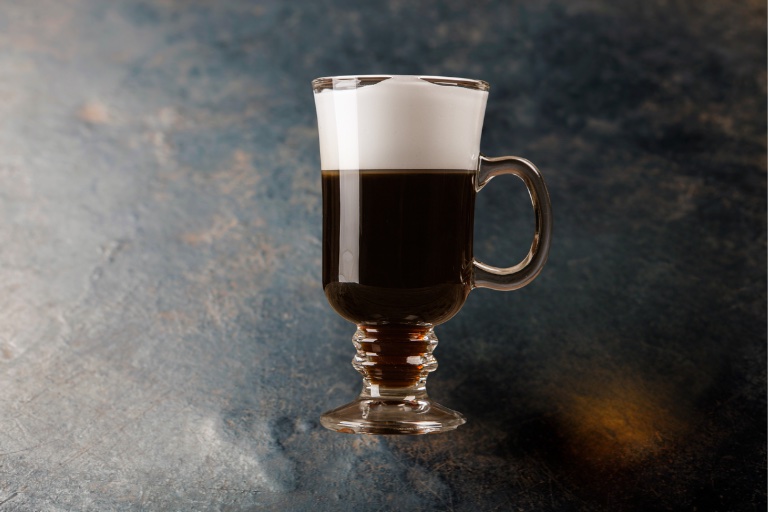
Turkish coffee is the tradition, but it is not the only coffee you can order at Ruvia. The hot drinks menu also includes Espresso, Double Espresso, Americano, Cappuccino and Cafe Latte for guests who prefer the coffee they drink at home, as well as a Sıcak Çikolata (hot chocolate) for anyone who wants something sweet and comforting. For a relaxed evening, there is also İrlanda Kahvesi (Irish coffee), a good choice on a cool autumn night after dinner.
A common question from visitors is whether they should try Turkish coffee if they normally drink lattes. Our advice is to try it at least once, ideally with a little sugar ("az şekerli") and a piece of dessert. It is strong, but the portion is small, and it gives you a real sense of how Istanbul has been drinking coffee for centuries. If you find it too intense, you can always switch to an espresso or a cappuccino the next time.
Where to Enjoy Coffee and Tea in Sultanahmet
Sultanahmet is one of the most visited neighbourhoods in the world, and after a morning at Topkapı Palace or an afternoon in the Basilica Cistern, most visitors want somewhere quiet to sit down. Ruvia Restaurant is on Kennedy Caddesi in Cankurtaran, the seaside edge of the historical peninsula, a short walk downhill from the main monuments. The restaurant is open every day from 12:00 to midnight, so you can stop for a tea in the afternoon, come back for a full dinner in the evening, or simply finish your day with a Turkish coffee and a dessert.
The terrace looks out over the sea, and the interior dining room is comfortable when the weather turns. Either way, a cup of coffee here is a chance to slow down after a busy day of sightseeing. If you want to plan your visit around the area's landmarks, our Istanbul Historical Peninsula travel guide is a helpful starting point, and you can read more about the city's eating habits in Istanbul's food culture.
Frequently Asked Questions
Is Turkish coffee stronger than espresso?
It tastes stronger because it is unfiltered and has a thick body, but the cup is small. The caffeine in a cup of Turkish coffee is roughly comparable to a single or double espresso, depending on how it is prepared.
Should I add milk to Turkish coffee or tea?
Traditionally, no. Turkish coffee and Turkish tea are both drunk without milk. If you prefer milky coffee, choose a cappuccino or a cafe latte instead.
Can I order Turkish coffee without sugar?
Yes. Ask for it "sade", which means plain. Just remember to say so when ordering, because the sugar is cooked into the coffee and cannot be added later.
What is the best dessert to have with Turkish coffee?
Pistachio baklava is the classic choice. Katmer is another excellent pairing, while warm künefe is often enjoyed with a glass of Turkish tea.
Can I come to Ruvia just for coffee or tea?
Ruvia is a full-service restaurant open from 12:00 to midnight, and its hot drinks and desserts are served throughout the day. For larger groups or busy evenings, it is best to make a reservation in advance.
Conclusion
A meal in Istanbul is not really finished until the coffee or tea arrives. Turkish coffee, with its fine grind, slow preparation and small rituals, is one of the oldest traditions of the city, and Turkish tea is the drink that keeps everyday Istanbul moving. At Ruvia Restaurant in Sultanahmet you can try both, alongside herbal tea, espresso-based coffees and a selection of classic Turkish desserts, just steps from the historical peninsula's most famous monuments. Order your coffee "orta", take a sip of water first, add a piece of baklava, and give yourself a few unhurried minutes by the sea. That is how Istanbul ends a good day.